Embark on a journey through the world of Male Contraceptive Methods, exploring the various options available and their impact on reproductive health.
Discover the advantages, disadvantages, and mechanisms behind these methods, shedding light on a crucial aspect of family planning.
Male Contraceptive Methods

Male contraceptive methods provide men with options to take control of their reproductive choices. Let’s explore the different types of male contraceptives available, along with their advantages, disadvantages, effectiveness rates, and mechanisms of action.
Types of Male Contraceptive Methods
- Condoms: Condoms are a barrier method that prevents sperm from reaching the egg. They are easily accessible, affordable, and also protect against sexually transmitted infections. However, they require consistent and correct use for effectiveness.
- Vasectomy: Vasectomy is a permanent surgical procedure that involves cutting or blocking the vas deferens, preventing sperm from being ejaculated. It is a highly effective form of contraception but is considered irreversible.
- Withdrawal: Also known as the pull-out method, withdrawal involves the man pulling out before ejaculation to prevent sperm from entering the vagina. It is free and convenient but has a high failure rate due to pre-ejaculate containing sperm.
Advantages and Disadvantages
- Condoms: Advantages include protection against STIs and easy accessibility. Disadvantages may include decreased sensitivity and the need for consistent use.
- Vasectomy: Advantages include long-term effectiveness and minimal ongoing effort. Disadvantages may include irreversibility and the need for a surgical procedure.
- Withdrawal: Advantages include cost-effectiveness and no side effects from hormonal methods. Disadvantages include a high failure rate and the need for precise timing.
Effectiveness Rates
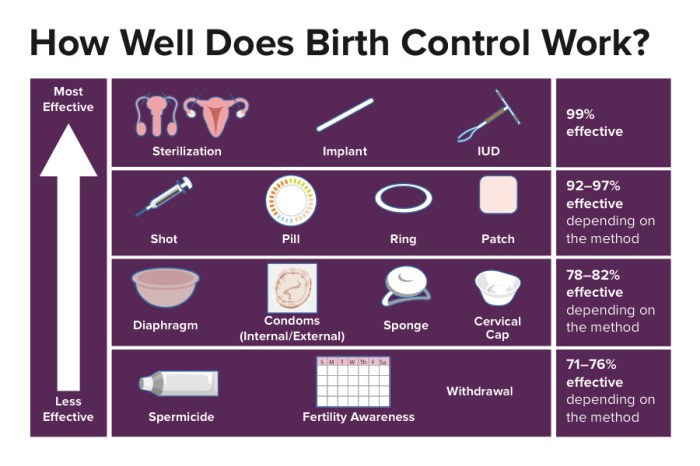
Male contraceptive methods, such as condoms and vasectomy, have varying effectiveness rates. Condoms, when used correctly, have a high effectiveness rate in preventing pregnancy and STIs. Vasectomy is considered one of the most effective forms of contraception, with a very low failure rate. However, the withdrawal method is less reliable due to the risk of pre-ejaculate containing sperm.
Mechanisms of Action
The mechanisms of action for male contraceptive methods vary. Condoms create a physical barrier to prevent sperm from reaching the egg. Vasectomy blocks the vas deferens, preventing the release of sperm during ejaculation. Withdrawal relies on the man pulling out before ejaculation to avoid sperm entering the vagina.
Male Hormonal Contraceptives
Male hormonal contraceptives work by altering hormone levels in the body to inhibit sperm production and prevent fertilization. These contraceptives are designed to suppress the release of hormones that stimulate the testes to produce sperm.
How Male Hormonal Contraceptives Work
Male hormonal contraceptives contain synthetic hormones that act on the hypothalamus and pituitary gland, disrupting the signals that control testosterone and sperm production. By lowering testosterone levels and inhibiting sperm development, these contraceptives reduce the chances of pregnancy.
Hormones Involved in Male Hormonal Contraceptives
The main hormones involved in male hormonal contraceptives are testosterone and progestin. Testosterone is responsible for sperm production, while progestin helps to suppress the production of hormones that stimulate sperm formation.
Comparison of Side Effects
Compared to female hormonal contraceptives, male hormonal contraceptives generally have fewer side effects. Common side effects may include acne, weight gain, and changes in libido. However, severe side effects are rare and usually reversible upon discontinuation of the contraceptive.
Research and Development Status
Currently, research and development of male hormonal contraceptives are ongoing, with promising results in clinical trials. Different formulations, such as injections, implants, and pills, are being tested for effectiveness and safety. The goal is to provide men with more contraceptive options and share the responsibility of family planning with their partners.
Non-Hormonal Male Contraceptive Methods
Non-hormonal male contraceptive methods offer an alternative to hormonal options, providing effective ways to prevent pregnancy without altering hormone levels in the body.
Examples of Non-Hormonal Male Contraceptive Methods
- Condoms: One of the most commonly used non-hormonal male contraceptive methods, condoms create a barrier that prevents sperm from reaching the egg.
- Withdrawal Method: Also known as the pull-out method, this involves the male withdrawing his penis from the vagina before ejaculation to prevent sperm from entering the woman’s body.
- Vasectomy: A permanent form of male contraception where the vas deferens is cut or blocked to prevent sperm from being released during ejaculation.
Mechanisms of Action for Non-Hormonal Male Contraceptive Methods
Non-hormonal male contraceptive methods work by either blocking the release of sperm or preventing sperm from reaching the egg, thereby reducing the chances of fertilization and pregnancy.
Emerging Non-Hormonal Male Contraceptive Technologies
- Male Birth Control Pill: Researchers are working on developing a male birth control pill that can be taken orally to inhibit sperm production or function without affecting hormone levels.
- Intra Vas Device (IVD): A non-hormonal contraceptive device inserted into the vas deferens to block the passage of sperm during ejaculation.
Potential Benefits of Non-Hormonal Male Contraceptive Methods
Non-hormonal male contraceptive methods offer advantages such as avoiding hormonal side effects, providing a reversible option for contraception, and reducing the risk of hormone-related health issues.
Contraceptives, Birth Control, Reproductive Health
Contraceptives play a crucial role in promoting reproductive health by empowering individuals to make informed decisions about family planning and preventing unintended pregnancies. The availability and access to various contraceptive methods are essential in ensuring the well-being of both women and men, as well as contributing to overall maternal and child health outcomes.
The Importance of Contraceptives in Promoting Reproductive Health
Contraceptives are not only about preventing pregnancies but also about ensuring that individuals have the autonomy to plan their families according to their desires and circumstances. By providing options for both men and women to control their fertility, contraceptives support reproductive health by reducing the risk of unplanned pregnancies and promoting responsible family planning practices.
Role of Birth Control in Family Planning and Population Control
Birth control methods, including contraceptives, play a vital role in family planning by allowing individuals to decide when and if they want to have children. This control over fertility helps in spacing pregnancies, ensuring healthier outcomes for both mothers and babies. Moreover, contraceptives contribute to population control by enabling individuals to have the number of children they desire, thus helping in managing population growth sustainably.
Contribution of Contraceptives in Reducing Unintended Pregnancies
Unintended pregnancies can have significant social, economic, and health consequences for individuals and families. Contraceptives offer a proactive solution by providing effective methods to prevent unwanted pregnancies, thereby reducing the need for abortions, lowering maternal and infant mortality rates, and promoting overall well-being.
Impact of Access to Contraceptives on Maternal and Child Health Outcomes
Access to contraceptives is directly linked to improved maternal and child health outcomes. By enabling individuals to plan pregnancies and space births, contraceptives contribute to reducing maternal mortality, improving prenatal care, and ensuring healthier outcomes for newborns. This access not only benefits the health of women but also has a positive impact on the overall well-being of families and communities.
Final Review
In conclusion, Male Contraceptive Methods play a vital role in promoting responsible family planning and reproductive health, offering a range of options for individuals and couples to consider.
FAQs
How effective are male contraceptive methods compared to female methods?
Male contraceptive methods have varying effectiveness rates, with some options like vasectomy being highly effective, comparable to certain female methods.
Are there any emerging non-hormonal male contraceptive technologies?
Yes, there are ongoing developments in non-hormonal male contraceptive methods, such as reversible inhibition of sperm under guidance (RISUG), offering potential alternatives to hormonal options.
What is the significance of contraceptives in promoting reproductive health?
Contraceptives play a crucial role in preventing unintended pregnancies, reducing maternal and child health risks, and enabling individuals to make informed choices about their reproductive well-being.